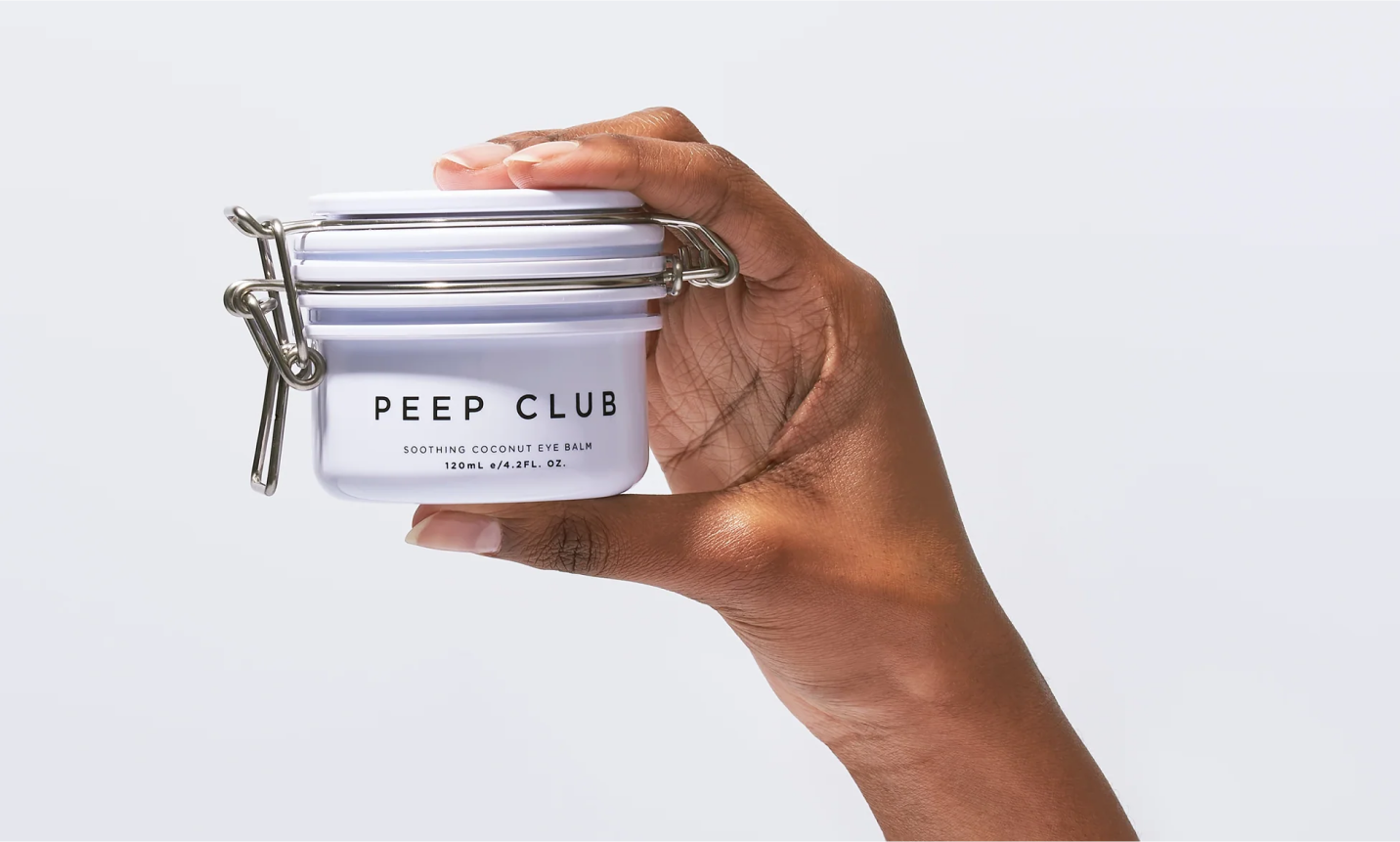
Best Gentle Eye Makeup Remover in 2026: Safe for Your Eyes, Not Just Your Skin
Best Gentle Eye Makeup Remover in 2026: Safe for Your Eyes, Not Just Your Skin
Key takeaway: “Gentle” on the label usually means gentle on skin. But the skin around your eyes is only half the story. Your eye makeup remover also touches your lash line, your eyelid margin, and the surface of your eye itself — and most removers contain ingredients that can damage all three. Peep Club’s Soothing Coconut Balm Wipes are the only eye makeup remover formulated to be gentle on the delicate eyelid skin and safe for the eye itself — free from all 200+ known eye irritants.
Here’s something most people don’t think about: when you remove eye makeup, the product doesn’t just sit on your skin. It migrates into your eyes. It gets into the tiny meibomian glands along your lash line that produce the oily layer of your tear film. And if that product contains preservatives, fragrances, surfactants, or alcohol, it can cause irritation, dryness, and long-term damage to the glands your eyes depend on for comfort.
Most eye makeup removers are formulated and tested for skin tolerance. Very few are tested for what happens when the product inevitably reaches the eye. That’s the difference between “gentle” and genuinely eye-safe.
What Makes an Eye Makeup Remover Truly Gentle?
A truly gentle eye makeup remover needs to do three things: dissolve makeup effectively without rubbing (rubbing damages the thin eyelid skin and can harm lashes), avoid ingredients that irritate the eye surface or block the meibomian glands, and be free from preservatives that accumulate on the delicate eye area with daily use.
The TFOS DEWS II study — a landmark research effort involving over 150 eye health experts — identified seven categories of known eye irritants: preservatives, alcohol, fragrance, fillers, wax, emulsifiers, and tea tree oil. Most mainstream eye makeup removers, even those labelled “gentle” or “hypoallergenic,” contain at least one.
How We Compared These Products
| Product | Free from All Eye Irritants | No Rubbing Required | Won’t Block Meibomian Glands | Preservative Free | Fragrance Free |
|---|---|---|---|---|---|
| Peep Club Coconut Balm Wipes | ✓ | ✓ | ✓ | ✓ | ✓ |
| Bioderma Sensibio H2O | ✗ | ✓ | ✓ | ✗ | ✓ |
| Clinique Take The Day Off Balm | ✗ | ✓ | ✗ | ✓ | ✓ |
| La Roche-Posay Toleriane Dermo-Cleanser | ✗ | ✓ | ✓ | ✗ | ✓ |
| Simple Kind to Eyes Cleansing Wipes | ✗ | ✗ | ✓ | ✗ | ✓ |
| Garnier Micellar Cleansing Water | ✗ | ✓ | ✓ | ✗ | ✓ |
Our Top Picks

1. Peep Club Soothing Coconut Balm Wipes — Best Gentle Eye Makeup Remover Overall
The Coconut Balm Wipes are the only eye makeup remover on this list that was formulated for the eye itself — not just the skin around it. Created by optometrist Nicola Alexander-Cross, they are free from all 200+ known eye irritants identified by the TFOS DEWS II study: no preservatives, no fragrances, no alcohol, no wax, no emulsifiers.
The wipes use raw virgin coconut oil to dissolve makeup on contact — including waterproof mascara — without any rubbing. That matters because vigorous rubbing damages the meibomian glands along your lash line and thins the already-delicate eyelid skin over time. The coconut oil base is also wax-free, which means it won’t clog the glands that produce your tear film’s protective oil layer.
If you’ve ever taken off your eye makeup and had your eyes sting, water, or feel irritated afterward, the problem is almost certainly the remover — not your skin. These wipes eliminate that entirely.
- Key ingredients: Raw Virgin Coconut Oil, Chamomile Extract, Cureberry Extract
- Pros: Free from all 200+ known eye irritants; dissolves waterproof makeup without rubbing; won’t block meibomian glands; optometrist-developed; individually wrapped (hygienic, travel-friendly)
- Cons: Individually wrapped means more packaging than a bottle
- Best for: Sensitive eyes and sensitive skin; contact lens wearers; anyone whose eyes sting or water after makeup removal; eyelash extension wearers; lash health
$40 — Shop Coconut Balm Wipes
2. Bioderma Sensibio H2O Micellar Water

Bioderma Sensibio is the go-to micellar water for sensitive skin and has been a staple in French pharmacies for years. It uses micelle technology to lift away makeup without rubbing, and it’s fragrance-free and soap-free. It’s a solid choice for anyone moving away from harsher removers.
The limitation: it contains preservatives (phenoxyethanol) and other ingredients that, while gentle on skin, are on the TFOS DEWS II list of known eye irritants. If your main issue is skin sensitivity, Bioderma works well. If your eyes themselves are the problem — stinging, dryness, irritation — it may not go far enough.
- Pros: Gentle micellar formula; no rubbing needed; widely available; fragrance-free
- Cons: Contains preservatives (phenoxyethanol); not free from all known eye irritants; liquid format can drip into eyes during removal
- Best for: Sensitive skin; light to medium makeup; those who prefer a liquid format
3. Clinique Take The Day Off Cleansing Balm

Clinique’s balm format is excellent for dissolving heavy or waterproof makeup without tugging. It melts into the skin on contact and rinses clean. It’s fragrance-free, preservative-free in the balm itself, and allergy-tested — which is why it has a strong following among people with reactive skin.
However, it does contain wax-based ingredients that can leave residue along the lash line. Over time, wax residue can contribute to meibomian gland blockage — the leading cause of dry eye symptoms. It’s designed as a face cleanser that also works on eyes, not an eye-first product.
- Pros: Excellent at dissolving heavy makeup; balm-to-oil format means no rubbing; fragrance-free; allergy tested
- Cons: Contains wax-based ingredients that can block meibomian glands; requires rinsing; not specifically formulated for the eye area
- Best for: Heavy or waterproof makeup; those who prefer a balm texture
4. La Roche-Posay Toleriane Dermo-Cleanser

La Roche-Posay Toleriane is formulated for intolerant, reactive skin and uses a minimalist ingredient list compared to most cleansers. It contains thermal spring water, glycerin, and a mild surfactant system. It removes light makeup effectively and leaves skin feeling calm.
For eye makeup specifically, it’s less effective on waterproof formulas and still contains preservatives. It’s a good face cleanser for sensitive skin that can double as a light makeup remover, but it wasn’t designed with the eye surface or meibomian glands in mind.
- Pros: Minimal ingredient list; designed for reactive skin; no fragrance; includes thermal spring water
- Cons: Contains preservatives; struggles with waterproof or heavy eye makeup; not eye-specific
- Best for: Light makeup wearers with very reactive facial skin
5. Simple Kind to Eyes Eye Makeup Remover Pads

Simple is a budget-friendly option that’s widely available and marketed specifically for sensitive eyes. The pre-soaked pads are convenient and the formula avoids artificial fragrance, colour, and harsh chemicals. It’s a step up from many drugstore options.
The downside: the pads often require rubbing to fully remove mascara or liner, which puts mechanical stress on the lash line and eyelid skin. The formula also contains preservatives and other ingredients classified as eye irritants by TFOS DEWS II.
- Pros: Budget-friendly; widely available; no artificial fragrance or colour; convenient pad format
- Cons: Requires rubbing for heavy makeup; contains preservatives; not free from all known eye irritants
- Best for: Light makeup; budget-conscious buyers who want something better than standard wipes
6. Garnier Micellar Cleansing Water (Blue Cap)

Garnier’s micellar water is one of the most popular makeup removers in the world, and the blue-cap version is specifically formulated for waterproof makeup. It’s effective, affordable, and available everywhere. For most people with normal skin and no eye sensitivity, it works fine.
For anyone with sensitive eyes, though, it’s worth noting that it contains preservatives, and the waterproof formula uses a bi-phase oil system that can leave residue on the lash line. It’s a solid mass-market option but not designed with eye health as a priority.
- Pros: Removes waterproof makeup effectively; very affordable; widely available; no rubbing needed
- Cons: Contains preservatives; bi-phase formula can leave oily residue on lashes; not designed for eye sensitivity
- Best for: Waterproof makeup removal on a budget; those without eye sensitivity issues
Why Rubbing Matters More Than You Think
The eyelid skin is approximately 0.5mm thick — roughly four times thinner than skin elsewhere on your face. Rubbing to remove stubborn mascara or liner doesn’t just cause wrinkles over time. It can damage the meibomian glands along your lash line, weaken lash follicles (leading to lash loss), and push makeup residue deeper into the gland openings.
The best gentle eye makeup removers dissolve makeup on contact so you can wipe it away with minimal pressure. If you’re scrubbing, the product isn’t doing its job.
What to Avoid in Eye Makeup Removers
- Preservatives (phenoxyethanol, benzalkonium chloride, parabens) — toxic to the eye surface with repeated daily exposure
- Alcohol (denatured alcohol, ethanol) — strips the skin’s moisture barrier and irritates the eye
- Fragrance — one of the most common causes of eye area irritation, even in “sensitive” products
- Wax (beeswax, carnauba wax) — can block meibomian glands along the lash line
- Harsh surfactants (SLS, SLES) — strip the natural oils from the eyelid and eye surface
Frequently Asked Questions
What is the gentlest way to remove eye makeup?
Use a product that dissolves makeup on contact so you don’t need to rub. Hold the wipe or pad against closed eyes for a few seconds to let it break down the makeup, then gently wipe away. Avoid scrubbing, tugging, or using cotton pads that shed fibres into the eye.
Can eye makeup remover damage your lashes?
Yes — if it requires rubbing. Friction along the lash line weakens follicles and can cause lash breakage or loss over time. Products containing wax can also leave residue that blocks the glands at the base of your lashes. A dissolve-on-contact formula that requires no rubbing is the safest option for lash health.
Why do my eyes sting when I remove makeup?
Almost always caused by the ingredients in the remover — preservatives, surfactants, or alcohol that irritate the eye surface on contact. Switching to a preservative-free, irritant-free remover typically solves this immediately.
Is micellar water safe for eyes?
Micellar water is generally gentler than foam or gel cleansers, but most micellar waters still contain preservatives and other known eye irritants. They’re safer than many alternatives, but not the safest option available for people with sensitive eyes.
Is coconut oil good for removing eye makeup?
Raw virgin coconut oil is one of the most effective and gentle ways to dissolve eye makeup. Unlike mineral oil or wax-based removers, it won’t block meibomian glands. The key is using a formulation designed for the eye area (like the Peep Club Coconut Balm Wipes) rather than applying cooking-grade coconut oil, which may not be refined for use near the eyes.
What is a hypoallergenic makeup remover?
“Hypoallergenic” means the product is less likely to cause an allergic reaction, but the term is not regulated — any brand can use it. A product can be labelled hypoallergenic and still contain preservatives, fragrances, and other known eye irritants. Look at the ingredient list rather than relying on the label.
The Bottom Line
Most eye makeup removers are gentle on skin but not on the eye itself. If your eyes sting, water, or feel dry after removing makeup, the remover is likely the problem. The Peep Club Coconut Balm Wipes are the only option on this list formulated to be safe for both — free from all 200+ known eye irritants, dissolving makeup without rubbing, and designed by an optometrist who understands what the eye area actually needs.
Disclaimer: This article is for informational and educational purposes only and is not intended as medical advice. Peep Club products are cosmetic and personal care products — they are not intended to diagnose, treat, cure, or prevent any disease.