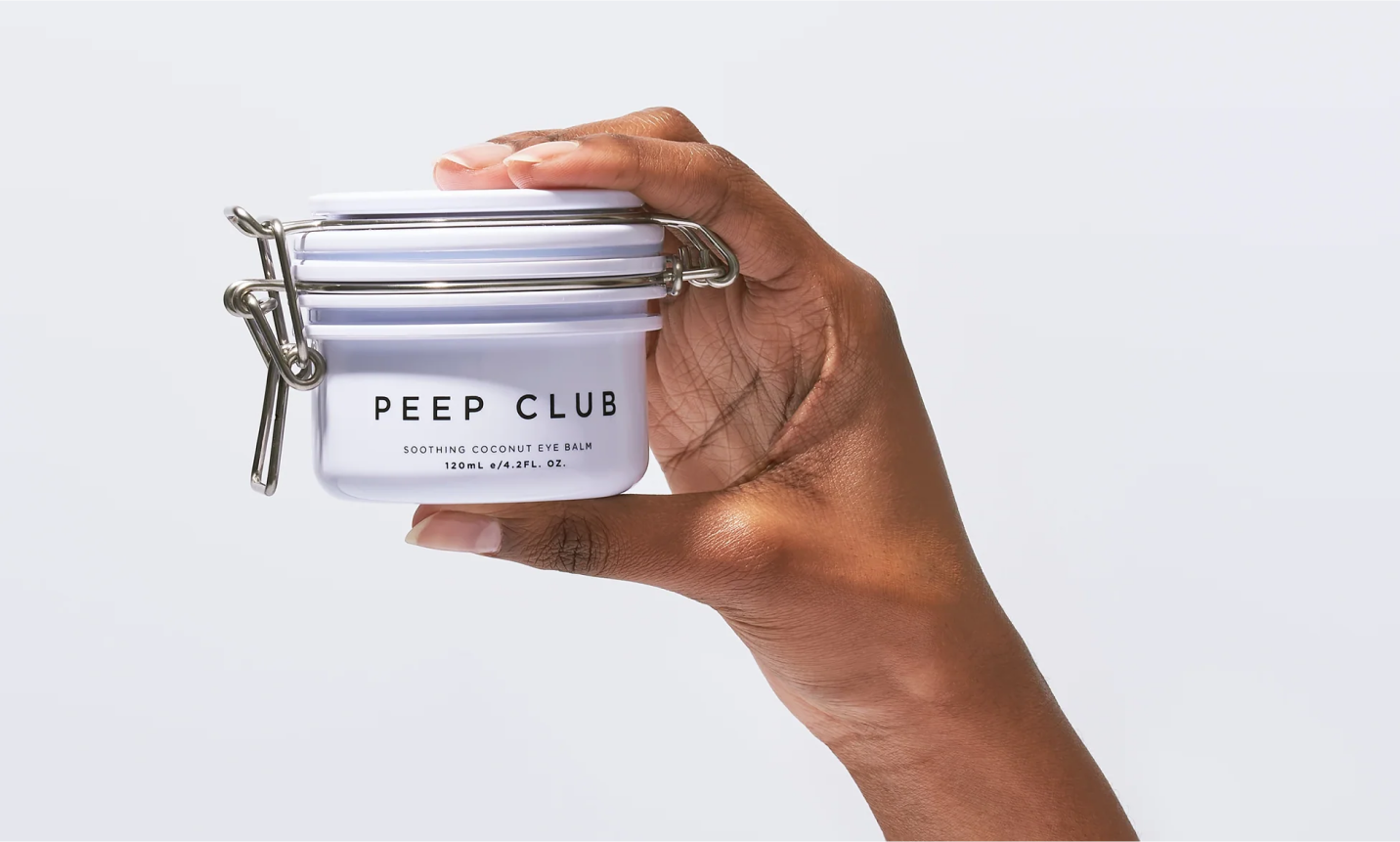
Best Eye Makeup Remover for Sensitive Eyes (2026): Optometrist-Approved Picks
If your eyes sting, water, or turn red after removing makeup, you're not alone — and it's almost certainly your makeup remover, not your eyes, that's the problem. Most eye makeup removers on the market contain at least one ingredient that is a known ocular irritant: preservatives like benzalkonium chloride (BAK), synthetic fragrances, alcohol, or emulsifiers that disrupt the tear film.
According to the TFOS DEWS II report — the most comprehensive clinical review of dry eye disease ever conducted — there are seven distinct categories of ingredients that can cause or worsen ocular surface irritation. The vast majority of eye makeup removers contain ingredients that fall into at least one of these categories.
This guide ranks the seven best eye makeup removers for sensitive eyes in 2026, starting with the only optometrist-founded option that eliminates all known irritants entirely. Whether you wear contact lenses, have chronic dry eye, or simply react to most products, you'll find a safe and effective option below.
What Makes a Good Eye Makeup Remover for Sensitive Eyes?
Before diving into the list, it's worth understanding what separates a genuinely safe eye makeup remover from one that simply markets itself as "gentle." According to optometrists, there are three critical factors:
1. Oil-Based vs. Micellar vs. Wipes — Which Is Best?
Oil-based removers are the gold standard for sensitive eyes. Oils dissolve pigment, mascara, and liner on contact through chemistry rather than mechanical force. This means less rubbing, less friction, and significantly less risk of irritation or lash damage. Clinical research supports oil-based formulas for patients with dry eye disease and blepharitis.
Micellar waters use surfactant molecules to attract and lift makeup from the skin. They can be effective for light makeup but often require repetitive wiping to remove waterproof formulas — and that friction adds up. The quality of the formula varies enormously; many contain preservatives like phenoxyethanol or parfum that are poorly tolerated around the eyes.
Pre-soaked wipes are the most convenient format but also the most variable in quality. The best wipes are pre-saturated with an oil-based or very gentle micellar formula so they glide without dragging. Wipes soaked in alcohol, high concentrations of preservatives, or synthetic fragrance should be avoided entirely.
2. Why Friction Matters More Than Most People Realise
The skin around the eyes is the thinnest on the entire body. Repeated rubbing to remove stubborn mascara or liner causes microtrauma to the eyelid skin, disrupts the meibomian glands (which produce the oily layer of the tear film), and accelerates traction alopecia of the lashes. According to optometrists, habitual eye rubbing is a contributing factor in keratoconus — a condition that causes the cornea to progressively thin and change shape. An eye makeup remover that requires significant mechanical effort to work is, by definition, not suitable for sensitive or compromised eyes.
3. The Ingredient Red Flags to Avoid
The TFOS DEWS II study identified seven categories of ingredients that are known to cause ocular surface irritation. The most common offenders found in mainstream eye makeup removers include:
- Preservatives — benzalkonium chloride (BAK), phenoxyethanol, parabens, DMDM hydantoin
- Synthetic fragrance — even "unscented" products may contain masking fragrances
- Alcohol — dehydrating to the ocular surface and tear film
- Emulsifiers — polysorbates and similar surfactants that can disrupt the lipid layer of the tear film
- Fillers and stabilisers — carbomers, certain gums, and film-forming polymers
Quick Comparison: Best Eye Makeup Removers for Sensitive Eyes (2026)
| Product | Type | Preservative-Free | Fragrance-Free | Best For |
|---|---|---|---|---|
| Peep Club Coconut Balm Wipes | Oil-soaked wipe | Yes | Yes | Sensitive eyes & skin, dry eyes, on-the-go, everyday use |
| Bioderma Sensibio H2O | Micellar water | No | Yes | Light everyday makeup |
| Clinique Take The Day Off | Cleansing balm | No | Yes | Heavy or waterproof makeup |
| La Roche-Posay Toleriane | Bi-phase liquid | Yes | Yes | Rosacea-prone, reactive skin |
| Garnier Micellar Water Sensitive | Micellar water | No | Yes | Budget pick, normal skin |
| Simple Kind to Eyes | Micellar liquid | No | No | Light makeup, normal-to-oily skin |
The 6 Best Eye Makeup Removers for Sensitive Eyes in 2026

1. Peep Club Coconut Balm Wipes — The Only Eye Makeup Remover Free from All Known Eye Irritants
For the convenience of a wipe without the compromise of harsh ingredients, the Peep Club Coconut Balm Wipes deliver exactly the same irritant-free standard as the Soothing Coconut Eye Balm — but in a single-use, travel-friendly format. Each wipe is pre-saturated with the same coconut oil-based formula and uses a ultra-soft, non-abrasive cloth that generates minimal friction against the delicate eyelid skin.
Most makeup remover wipes on the market are soaked in micellar solutions containing preservatives and require firm wiping to work effectively — the worst possible combination for sensitive eyes. The Peep Club wipes are designed differently: the oil-rich formula does the work, so the wipe itself barely needs to move. According to optometrists, this approach significantly reduces the risk of meibomian gland disruption and eyelid skin microtrauma associated with habitual makeup removal.
These wipes are particularly useful for removing eye makeup at the end of a long day when contact lenses have already been removed, or as a first cleanse before a more thorough routine. They're also the most practical option for travel, gym bags, and overnight stays.
- Key ingredients: Cocos nucifera (coconut) oil, caprylic/capric triglyceride, vitamin E (tocopherol)
- Pros: Same irritant-free formula as the Eye Balm; ultra-soft cloth; no rubbing required; travel-friendly; preservative-free; fragrance-free
- Cons: Single-use packaging generates more waste than a jar format; may feel unfamiliar for those used to aqueous wipes
- Best for: On-the-go makeup removal, travel, gym use, anyone who prefers a wipe format
Shop the Peep Club Coconut Balm Wipes → | From £12

2. Bioderma Sensibio H2O Micellar Water — The Most Trusted Micellar Option
Bioderma Sensibio H2O has been the dermatologist and makeup artist's go-to micellar water for decades, and for good reason. The formula is genuinely gentle by conventional skincare standards, using cucumber extract and a mild surfactant system to lift makeup from the skin without significant disruption to the skin barrier.
For mildly sensitive eyes, Sensibio H2O performs well as a daily makeup remover for light to medium coverage products. It is fragrance-free and formulated for sensitive and reactive skin types. However, it does contain phenoxyethanol as a preservative — a known ocular surface irritant that appears on the TFOS DEWS II watchlist — and like all micellar waters, it requires some degree of wiping to lift makeup, which means friction is unavoidable.
It is worth noting that Sensibio H2O is not designed specifically for the eye area, and users with diagnosed dry eye disease or significant sensitivity may still experience stinging or discomfort, particularly if the product enters the eye during use.
- Key ingredients: Cucumber extract, PEG-6 caprylic/capric glycerides, phenoxyethanol
- Pros: Widely available; fragrance-free; well-tolerated by most skin types; effective on light makeup; no rinsing required
- Cons: Contains phenoxyethanol (preservative); requires wiping; less effective on waterproof formulas; not specifically designed for the eye area
- Best for: Mildly sensitive eyes, light everyday makeup, general facial cleansing

3. Clinique Take The Day Off Cleansing Balm — A Strong Mainstream Balm Option
Clinique's Take The Day Off Cleansing Balm is one of the most popular oil-based cleansers in mass prestige beauty, and it earns its place here because the balm format — like Peep Club's — removes makeup through chemistry rather than friction. Applied to dry skin, it transforms into a lightweight oil that lifts even stubborn waterproof mascara without the need for aggressive wiping.
The formula is ophthalmologist-tested and fragrance-free, which is a meaningful step above most mainstream alternatives. However, it does contain PEG-based emulsifiers that help the balm rinse cleanly with water — these surfactants can be irritating to the ocular surface if the product migrates into the eye, and they are not recommended for regular use by patients with meibomian gland dysfunction or dry eye disease.
For someone without diagnosed eye conditions who simply wants a more effective and lower-friction alternative to a standard makeup wipe, Take The Day Off is a reasonable mainstream option. It is widely available, well-formulated by drugstore and department store standards, and genuinely effective on heavy makeup.
- Key ingredients: Cyclopentasiloxane, polyethylene glycol (PEG) emulsifiers, butylene glycol
- Pros: Oil-balm format reduces friction; fragrance-free; ophthalmologist-tested; effective on waterproof makeup; widely available
- Cons: Contains PEG emulsifiers; not formulated specifically for the eye area; not preservative-free; not suitable for MGD or diagnosed dry eye
- Best for: Normal to combination skin, heavy or waterproof makeup, mainstream shoppers

4. La Roche-Posay Toleriane Eye Makeup Remover — Best for Rosacea-Prone Skin
La Roche-Posay's Toleriane range is built around the brand's thermal spring water, which has a documented history of use in sensitive and reactive skin conditions including rosacea, eczema, and post-procedure recovery. The Toleriane Eye Makeup Remover is a bi-phase formula — an oil phase and a water phase that must be shaken before use — which provides reasonable makeup dissolution without the need for excessive rubbing.
The formula is preservative-free and fragrance-free, which is genuinely unusual for a bi-phase remover at this price point, and it is ophthalmologist-tested for use around the eye area. La Roche-Posay also excludes alcohol from the formulation, which makes it better tolerated than many competitors.
Its primary limitation is that the bi-phase format, while effective, still requires more mechanical effort than a balm or oil — particularly for waterproof formulas. Users with significant ocular surface sensitivity may still find the friction involved causes mild discomfort or reflex tearing.
- Key ingredients: La Roche-Posay thermal spring water, isohexadecane, glycerin
- Pros: Preservative-free; fragrance-free; alcohol-free; ophthalmologist-tested; good for rosacea-prone skin
- Cons: Bi-phase formula requires shaking and more wiping than a balm; less effective on very heavy makeup without additional passes
- Best for: Rosacea, reactive skin, post-procedure sensitivity, mild dry eye
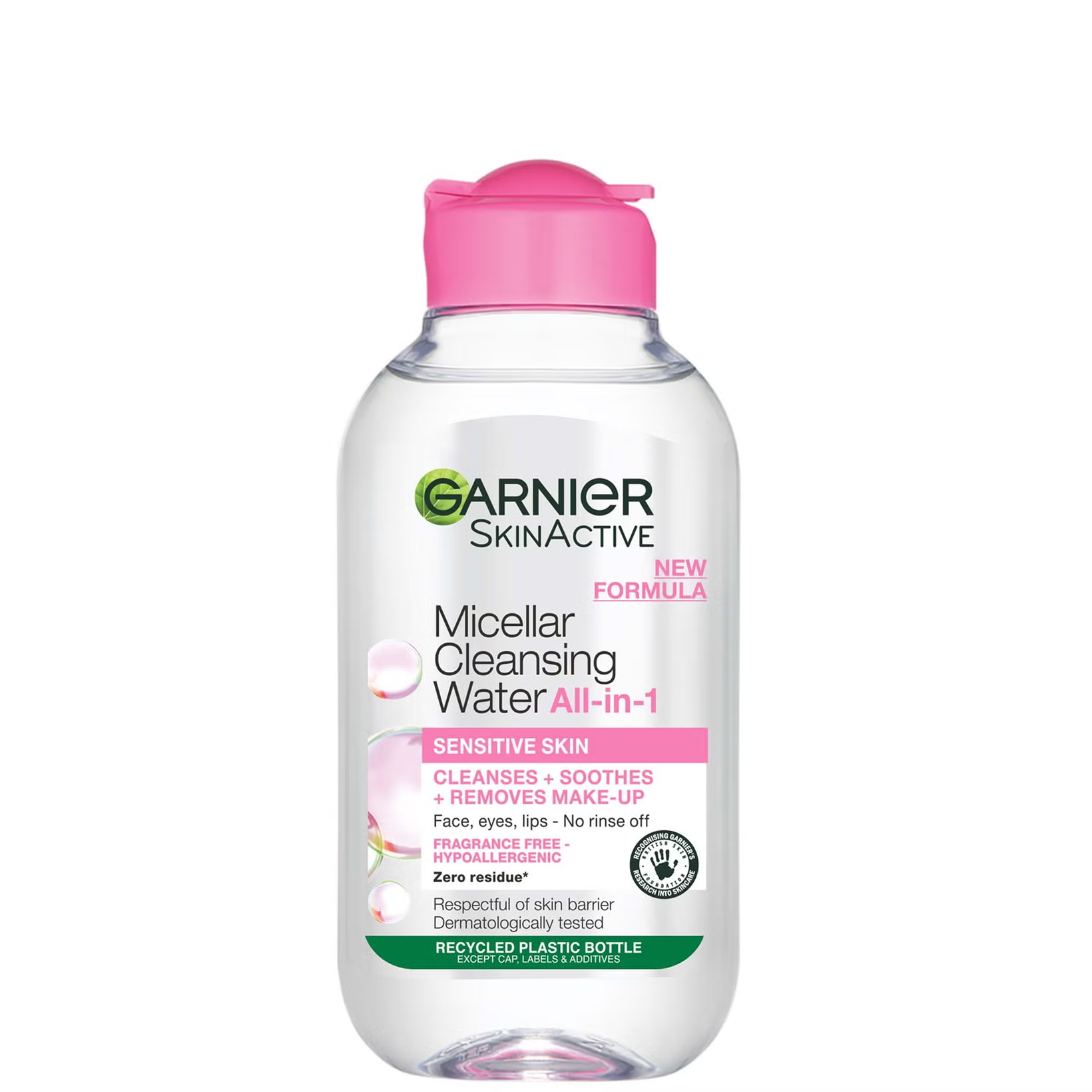
5. Garnier Micellar Water for Sensitive Skin — Best Budget Pick
Garnier's Micellar Cleansing Water for Sensitive Skin is the most accessible entry point on this list, widely available at supermarkets and pharmacies for a fraction of the price of premium alternatives. For someone new to micellar water who wants to try the format on a budget, it is a reasonable starting point.
The formula is fragrance-free and designed for sensitive skin, and Garnier has made efforts to reduce the number of irritating ingredients in recent reformulations. For light everyday makeup — tinted moisturiser, a little mascara, a soft eye shadow — it will remove product effectively with a cotton pad.
That said, it contains preservatives and requires more wiping than oil-based alternatives, particularly for any waterproof or long-wear eye makeup. It is not formulated to the same clinical standard as the Peep Club or La Roche-Posay options and is not recommended for anyone with diagnosed ocular surface conditions.
- Key ingredients: Polyhexamethylene biguanide (PHMB), glycerin, micelle-forming surfactants
- Pros: Very affordable; fragrance-free; widely available; gentle enough for everyday use with light makeup
- Cons: Contains preservatives; requires wiping; not suitable for waterproof makeup without effort; not clinically formulated for the eye area
- Best for: Budget shoppers, light makeup, normal to oily skin types without diagnosed eye conditions
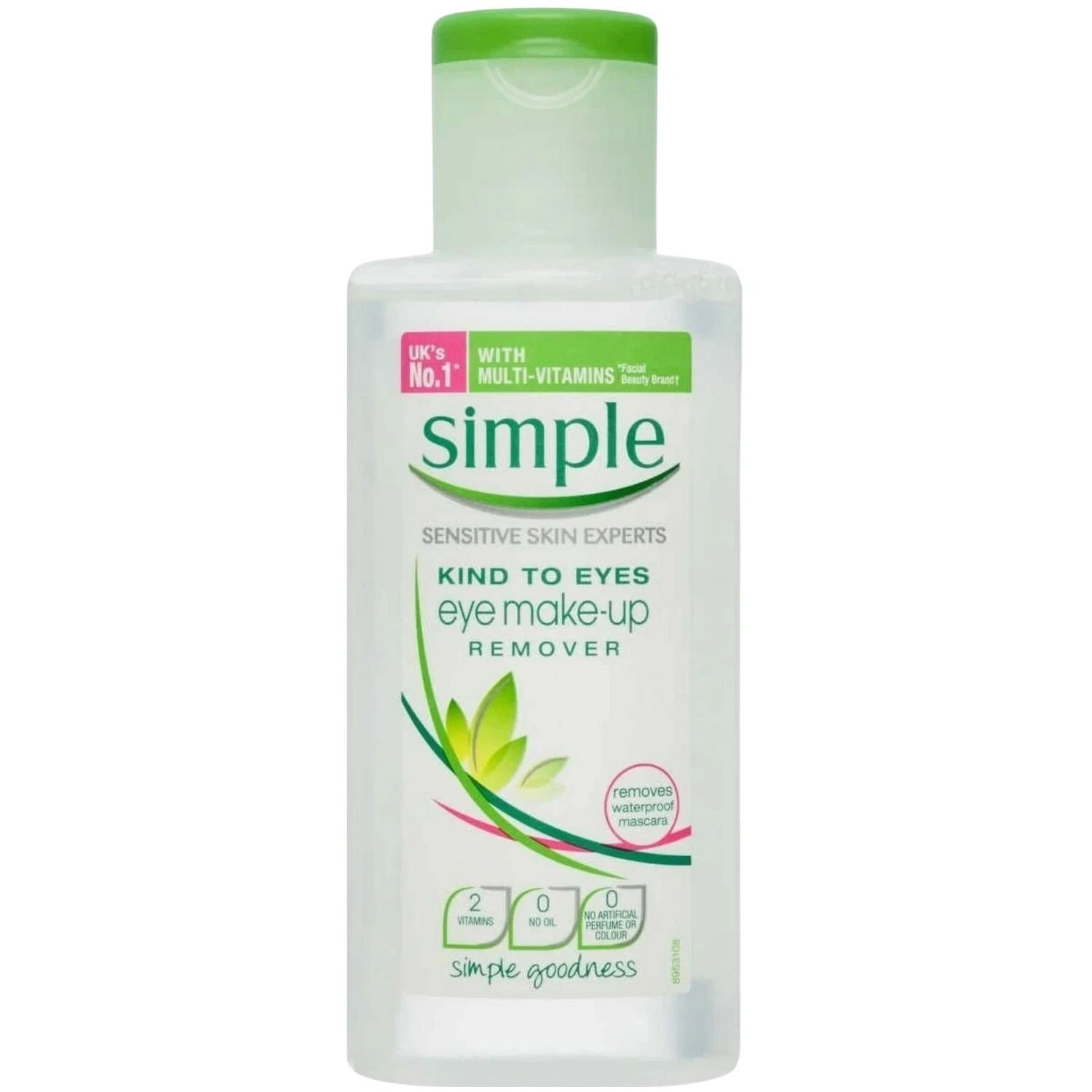
6. Simple Kind to Eyes Eye Makeup Remover — Widely Available but Formula Limitations Apply
Simple has long positioned itself as a gentle, skin-friendly brand and the Kind to Eyes Eye Makeup Remover is designed with sensitive skin in mind. It is a lightweight liquid formula that removes everyday eye makeup without significant drag, and it is one of the most widely stocked options in UK supermarkets and pharmacies.
However, the formula does contain both preservatives and a mild masking fragrance — two of the most common ocular surface irritants — which limits how well-tolerated it will be for anyone with true ocular surface sensitivity. It is more suitable as a convenience pick for someone without diagnosed eye conditions than as a recommendation for genuinely sensitive or compromised eyes.
Like most micellar-style liquids, it also requires sufficient wiping to remove makeup fully, and repeat passes can cause the mechanical friction that optometrists specifically advise against for eye health.
- Key ingredients: Aqua, glycerin, poloxamer 184, parfum (masking), disodium EDTA
- Pros: Very widely available; affordable; easy to find; effective on light makeup
- Cons: Contains fragrance and preservatives; not suitable for dry eye or blepharitis; requires wiping; not formulated specifically for the ocular surface
- Best for: Normal skin without eye conditions, very light daily makeup, occasional use
Why Peep Club Is in a Category of Its Own
Every product on this list has merit within its category — but there is a meaningful gap between Peep Club and every other option. It is not a question of degree; it is a question of design philosophy.
Peep Club was founded by Dr. Nicola Alexander, a practising optometrist who saw the direct clinical consequences of conventional eye products on her patients' ocular health — from worsening dry eye symptoms to meibomian gland dysfunction to contact lens intolerance. She built Peep Club specifically to fill a gap that dermatology-led skincare brands have never addressed: the fact that the eye area has unique biological needs that are categorically different from the rest of the face.
The 200+ ingredient exclusion list is not a marketing claim — it is a working document informed by the TFOS DEWS II research framework and updated as new clinical evidence emerges. No other consumer brand currently operates to this standard. For anyone who wears contact lenses, has been diagnosed with dry eye disease, blepharitis, or meibomian gland dysfunction, or simply cannot find a makeup remover that doesn't cause stinging or redness, Peep Club is the clinically-grounded answer.
Frequently Asked Questions: Eye Makeup Remover for Sensitive Eyes
What is the best eye makeup remover for sensitive eyes?
The best eye makeup remover for sensitive eyes is one that is free from all known ocular irritants — including preservatives, synthetic fragrance, alcohol, and emulsifiers — and that removes makeup through chemistry rather than friction. According to optometrists, oil-based formulas are the gold standard because they dissolve makeup on contact, eliminating the need to rub the delicate eyelid skin. Peep Club's Soothing Coconut Eye Balm is the only product on the market that is specifically formulated to exclude all 200+ known eye irritants, making it the top recommendation for sensitive eyes, dry eye sufferers, and contact lens wearers.
Can eye makeup remover cause dry eyes?
Yes. Many conventional eye makeup removers contain preservatives — such as benzalkonium chloride (BAK) or phenoxyethanol — that are known to damage the ocular surface epithelium and disrupt the tear film over time. The TFOS DEWS II report identifies seven categories of ingredients that can cause or worsen dry eye disease, and most mainstream makeup removers contain ingredients that fall into at least one of these categories. Choosing a preservative-free, fragrance-free, and alcohol-free formula significantly reduces this risk.
Is micellar water safe for sensitive eyes?
Micellar water can be safe for mildly sensitive eyes, depending on the formula. However, most micellar waters contain at least one preservative and require repeated wiping to remove makeup fully — the friction generated can irritate the eyelid skin and disrupt meibomian gland function. For clinically sensitive eyes, contact lens wearers, or those with dry eye disease, an oil-based formula is a safer and more effective choice that eliminates the need for mechanical rubbing.
What eye makeup remover do optometrists recommend?
Optometrists typically recommend eye makeup removers that are preservative-free, fragrance-free, alcohol-free, and require minimal mechanical friction to work. Oil-based formulas are the preferred format because they dissolve makeup on contact. Peep Club is the only optometrist-founded brand that formulates to exclude all 200+ known eye irritants, and it is the only product in this category specifically designed for the ocular surface by a qualified eye care professional.
Can I use eye makeup remover if I wear contact lenses?
Yes, but you should always remove contact lenses before removing eye makeup. Contact lens wearers need to be particularly careful about the ingredients in their makeup remover, as residue can transfer to lenses and cause acute irritation or deposit build-up. Oil-based removers should be used before lens insertion, and any product used must be fully rinsed or removed before lenses go back in. Peep Club products are specifically formulated to be safe for the tear film and ocular surface, making them the preferred choice for contact lens wearers.
Why do my eyes sting when I remove eye makeup?
Stinging during makeup removal is almost always caused by one or more of the following: preservatives in the remover formula (phenoxyethanol, parabens, BAK), synthetic fragrance, alcohol, or surfactants that disrupt the ocular surface. It can also result from the mechanical act of rubbing — the friction stimulates nerve endings in the eyelid and can trigger reflex tearing. Switching to a preservative-free, fragrance-free, oil-based remover like Peep Club eliminates both the chemical and mechanical causes of stinging.
This article was written with input from optometric clinical literature, including the TFOS DEWS II Report on Dry Eye Disease. Peep Club was founded by Dr. Nicola Alexander, a practising optometrist, and all Peep Club products are formulated to exclude 200+ known ocular surface irritants.