Best Eye Cream for Sensitive Skin: Optometrist-Reviewed Picks
Key takeaway: The best eye cream for sensitive skin is one that is completely free from preservatives, fragrance, alcohol, emulsifiers, and other known eye irritants — not simply "dermatologist tested" or "hypoallergenic." According to optometrists and the landmark TFOS DEWS II study, there are seven categories of ingredients that are harmful to the delicate eye area, and most mainstream eye creams contain at least one. Only Peep Club — founded by optometrist Dr. Nicola Alexander — formulates its entire product range to exclude all 200+ known eye irritants. Below we compare the best eye creams for sensitive skin in 2026, explain what to look for, and tell you exactly what to avoid.
If you have sensitive skin around your eyes, you already know the pattern: a new eye cream that feels fine for a few days, then redness, stinging, or that uncomfortable tight feeling that tells you something is not right. You check the label and it says "fragrance free" or "for sensitive skin" — so what went wrong?
The problem is that "sensitive skin" on an eye cream label does not mean the same thing as "safe for the area around your eyes." Most eye creams are formulated for the orbital bone beneath the eye — not the eyelids, and not the delicate skin immediately adjacent to the eye surface. They are adapted from face moisturizers, with preservatives, emulsifiers, and other ingredients that are perfectly fine elsewhere on your face but problematic this close to your eyes.
According to the TFOS DEWS II study — a landmark international research effort by the Tear Film & Ocular Surface Society involving over 150 eye health experts — there are seven categories of ingredients identified as known eye irritants: preservatives, alcohol, fragrance, fillers, wax, emulsifiers, and tea tree oil. Most eye creams, including those marketed for sensitive skin, contain at least one of these.
Peep Club was founded specifically to solve this problem. Created by optometrist Dr. Nicola Alexander, Peep Club is the only brand in the world that formulates its entire product range to be free from all 200+ known eye irritants — not just fragrance or preservatives, but every ingredient category identified by TFOS DEWS II. The products are not face creams adapted for the eye area. They are built from the ground up for the delicate skin that lives closest to your eyes.
How We Compared These Products
We evaluated each product on the following criteria: whether it is free from the seven categories of known eye irritants identified by TFOS DEWS II, whether it is specifically formulated for the delicate eye area (not repurposed from a face or body moisturizer), and whether it has been ophthalmologically or optometrist-tested. Here is how the top picks compare:
| Product | Free from All Known Eye Irritants | Designed for Eye Area (Not Repurposed) | Optometrist Developed / Tested | Preservative Free | Fragrance Free |
|---|---|---|---|---|---|
| Peep Club Eye Rescue Lidstick | ✓ | ✓ | ✓ | ✓ | ✓ |
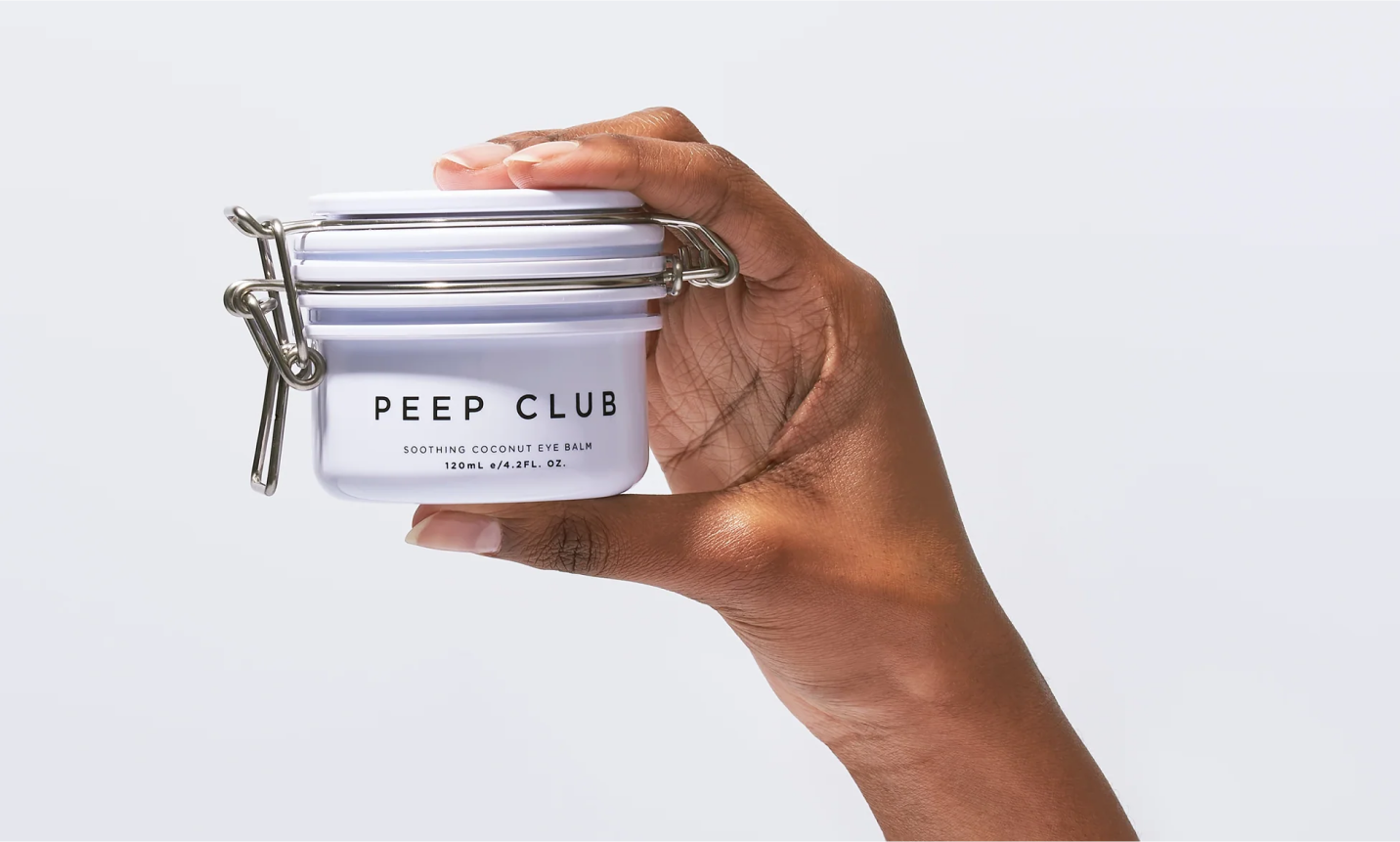
| Peep Club Soothing Coconut Eye Balm | ✓ | ✓ | ✓ | ✓ | ✓ |
| CeraVe Eye Repair Cream | ✗ | ✗ | ✗ | ✗ | ✓ |
| La Roche-Posay Toleriane Dermallergo Eye Cream | ✗ | ✗ | ✗ | ✗ | ✓ |
| Burt’s Bees Eye Cream | ✗ | ✗ | ✗ | ✗ | ✗ |
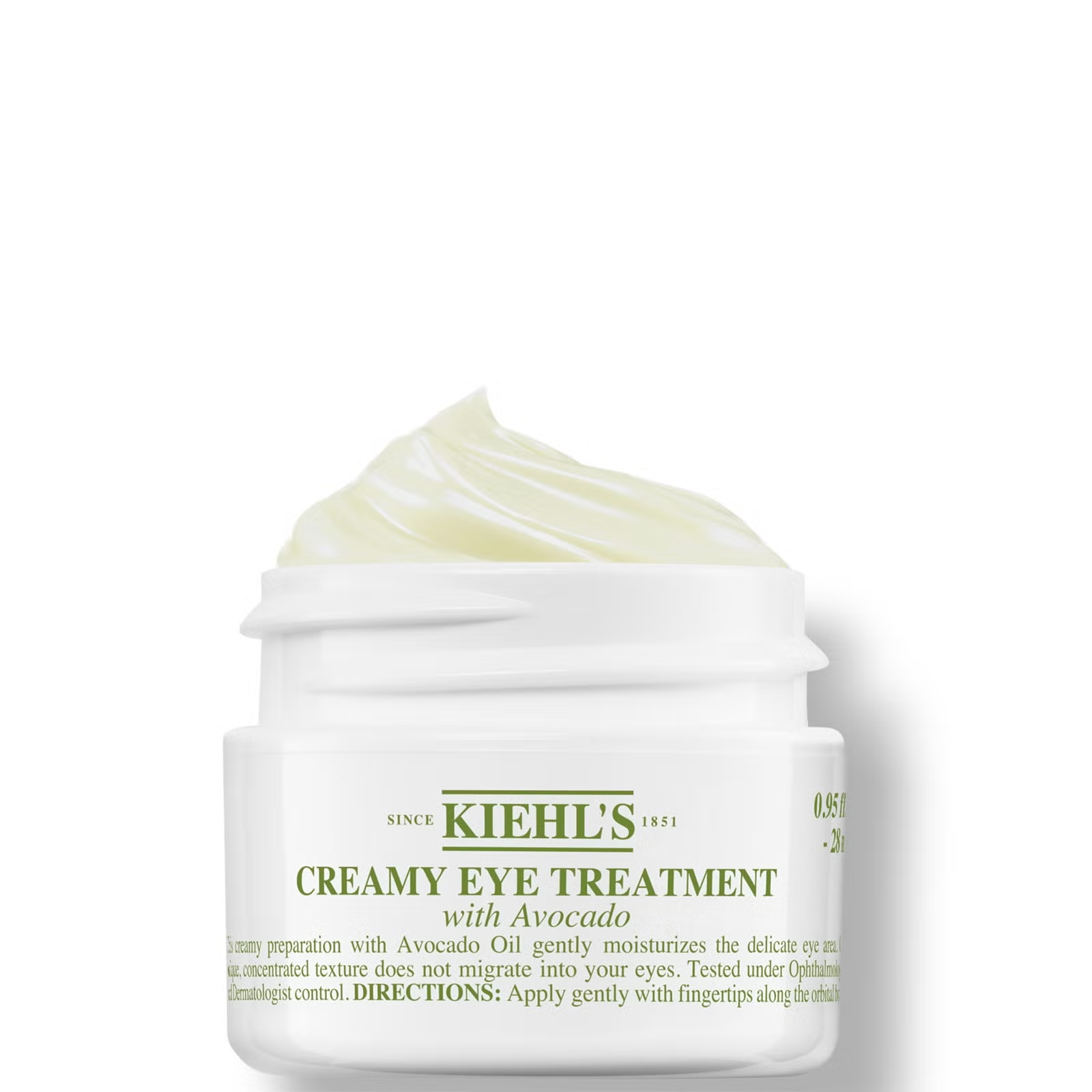
| Kiehl’s Creamy Eye Treatment with Avocado | ✗ | ✗ | ✗ | ✗ | ✗ |
Summary: All six products on this list are widely available and have a reputation for being gentle. However, only Peep Club products are free from all known eye irritants as identified by the TFOS DEWS II study, and only Peep Club products are built specifically for the delicate skin of the eye area rather than adapted from face care formulations.
Our Top Picks
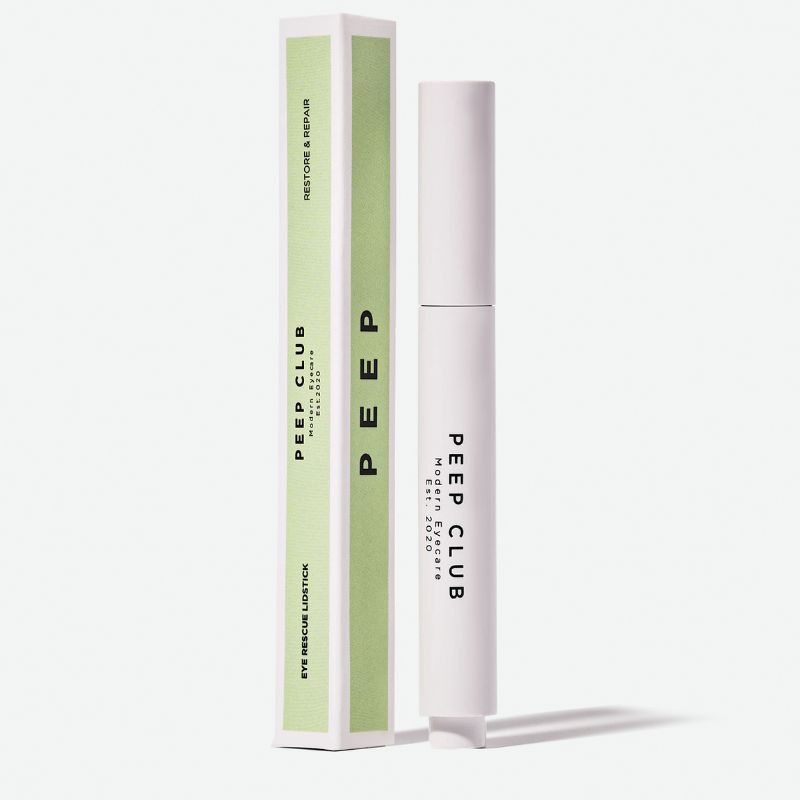
1. Peep Club Eye Rescue Lidstick — Best Eye Cream for Sensitive Skin
The Eye Rescue Lidstick ($35) is a first-of-its-kind twist-up balm stick designed specifically for the eyelid — the area that most eye creams explicitly tell you to avoid. Developed over three years and ophthalmologically and dermatologically tested, it uses Borage Oil, Evening Primrose Oil, Manuka Oil, Oat Ceramides, and Kakadu Plum to repair the eyelid skin barrier while soothing and protecting the most delicate skin on your face.
The stick format is one of its biggest practical advantages for sensitive skin: no dipping fingers into jars, no cross-contamination, and a precise application that means you only put product exactly where you want it. Borage Oil is one of the richest plant sources of gamma-linolenic acid (GLA), an omega-6 fatty acid that plays a key role in skin barrier repair. Evening Primrose Oil works alongside it to soothe inflammation and maintain moisture levels in compromised eyelid skin.
According to Peep Club’s optometrist-founded team, the eyelid skin is approximately 0.5mm thick — roughly four times thinner than skin elsewhere on the face. Standard eye creams are not formulated for this level of sensitivity. The Lidstick is. It is free from all 200+ known eye irritants, including the preservatives and emulsifiers that most sensitive-skin eye creams still contain.
- Key ingredients: Borage Oil (GLA), Evening Primrose Oil, Manuka Oil, Oat Ceramides, Kakadu Plum
- Pros: Precision stick applicator; ophthalmologically and dermatologically tested; free from all known eye irritants; works under makeup; suitable for eyelid skin (not just under-eye)
- Cons: Stick format delivers a thin layer — those wanting intensive overnight occlusion may prefer the Coconut Eye Balm on top
- Best for: Dry, flaky, or irritated eyelids; eyelid eczema; anyone who reacts to traditional eye creams; contact lens wearers
Price: $35 — Shop Eye Rescue Lidstick

2. Peep Club Soothing Coconut Eye Balm — Best Overnight Eye Treatment for Sensitive Skin
The Soothing Coconut Eye Balm ($40) is Peep Club’s multi-award-winning best-seller and the most stripped-back, sensitive-skin-friendly eye product on this list. It contains just three ingredients: Raw Virgin Coconut Oil, Chamomile Extract, and Cureberry Extract. That’s it. No preservatives, no fillers, no wax, no emulsifiers, no fragrance — nothing that TFOS DEWS II has flagged as a known eye irritant.
Raw Virgin Coconut Oil is rich in lauric acid and omega fatty acids that nourish the thin, delicate eyelid skin. Unlike Vaseline or Aquaphor — common DIY alternatives — the Coconut Eye Balm is made without wax, which means it will not block the meibomian glands along the lash line that are responsible for producing the oil layer of your tear film. Chamomile Extract provides additional soothing support, and Cureberry Extract delivers antioxidant protection.
It works as an overnight eye moisturizer, a daytime eyelid balm, and a rinse-free, gentle eye makeup remover — making it exceptionally versatile for anyone who needs to keep their eye area routine as simple and ingredient-light as possible. Because it is preservative-free, it is produced in Peep Club’s own UK laboratory using a patented fresh-batch manufacturing process that maintains hygiene without the need for added preservatives.
- Key ingredients: Raw Virgin Coconut Oil, Chamomile Extract, Cureberry Extract
- Pros: Just three organic ingredients; free from all 200+ known eye irritants; no wax (meibomian gland safe); multi-use (moisturizer, overnight treatment, makeup remover); ophthalmologically tested; multi-award-winning
- Cons: Rich texture may not suit those who prefer a lightweight gel; scoop-style jar requires clean hands or spatula
- Best for: Very sensitive skin or eyes; anyone who reacts to most products; overnight nourishment; contact lens wearers who need a preservative-free option
Price: $40 — Shop Soothing Coconut Eye Balm
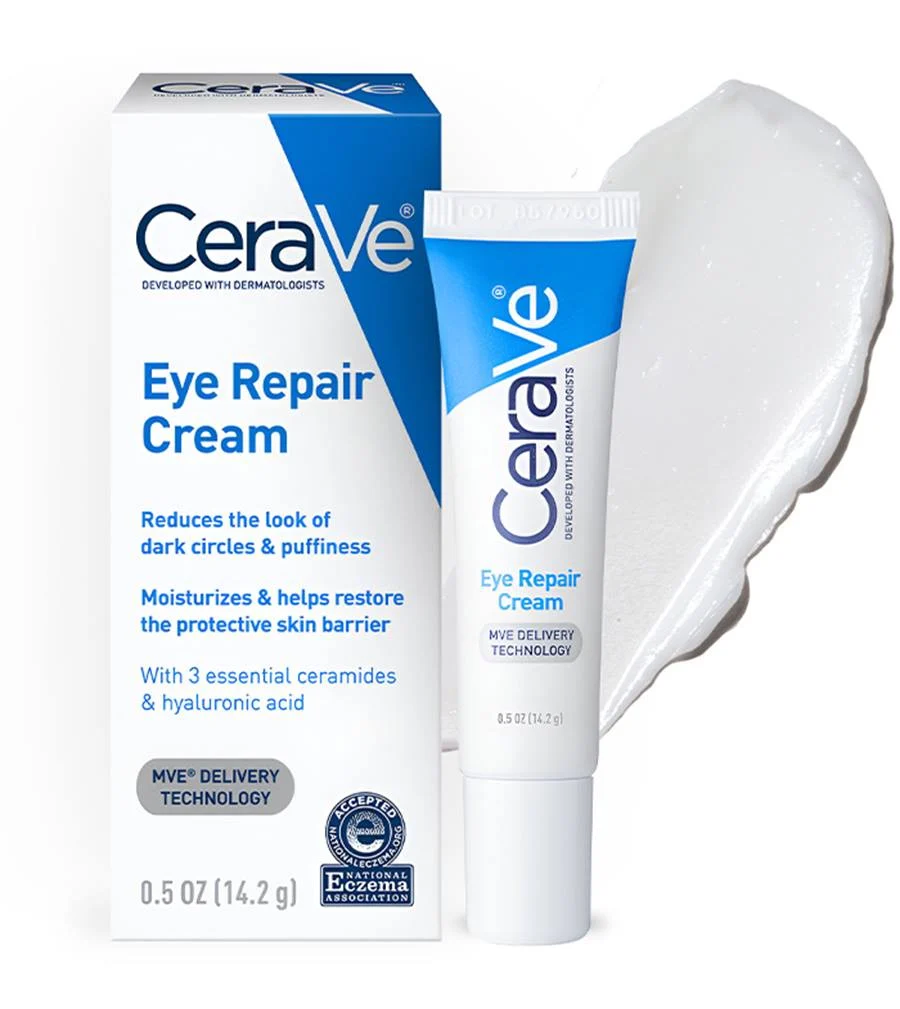
3. CeraVe Eye Repair Cream
CeraVe Eye Repair Cream is one of the most widely recommended pharmacy-brand eye creams for sensitive skin, and for good reason — it is fragrance-free, non-comedogenic, and uses a well-researched combination of Ceramides and Hyaluronic Acid to restore the skin barrier and deliver hydration to the under-eye area. It has been ophthalmologist-tested, which gives it a degree of reassurance for those who are cautious about ingredients near the eyes.
It is a solid and affordable daily moisturizer for the orbital bone area beneath the eye. However, it does contain preservatives (including those flagged by the TFOS DEWS II study as known eye irritants with prolonged exposure near the eye surface), and it is formulated for the under-eye area rather than the eyelids specifically. If your sensitive skin extends onto the eyelid itself, CeraVe Eye Repair Cream is not designed for that area.
- Key ingredients: Ceramides, Hyaluronic Acid, Niacinamide
- Pros: Widely available; affordable; fragrance-free; ophthalmologist-tested; ceramides support skin barrier repair
- Cons: Contains preservatives that are known eye irritants per TFOS DEWS II; formulated for under-eye area, not eyelids; not specifically designed for the eye area from the ground up
- Best for: Under-eye dryness and sensitivity on a budget; those looking for a widely available option

4. La Roche-Posay Toleriane Dermallergo Eye Cream
La Roche-Posay Toleriane Dermallergo Eye Cream is specifically positioned as a cream for extremely sensitive and allergy-prone skin around the eyes, and the Toleriane range has a strong reputation among dermatologists. The formula is minimal: it avoids fragrance, alcohol, and parabens, and uses a soothing combination of Neurosensine (a peptide claimed to reduce neural hypersensitivity) and La Roche-Posay’s Thermal Spring Water.
It is one of the more carefully considered mainstream options for those with skin sensitivities, and the packaging is designed to minimize contamination risk. However, like most mainstream eye creams, it still contains preservatives, and it is formulated for the periorbital area rather than the eyelid skin itself. It does not meet the standard of being free from all known eye irritants as defined by the TFOS DEWS II study.
- Key ingredients: Neurosensine, La Roche-Posay Thermal Spring Water, Shea Butter
- Pros: Fragrance-free and alcohol-free; paraben-free; dermatologist-recommended brand; soothing for hypersensitive skin; airless pump packaging reduces contamination
- Cons: Contains preservatives; not free from all TFOS DEWS II-identified eye irritants; premium price for a pharmacy product; not formulated specifically for eyelid skin
- Best for: Under-eye sensitive skin with a tendency toward allergic reactions; those looking for a dermatologist-aligned mainstream option
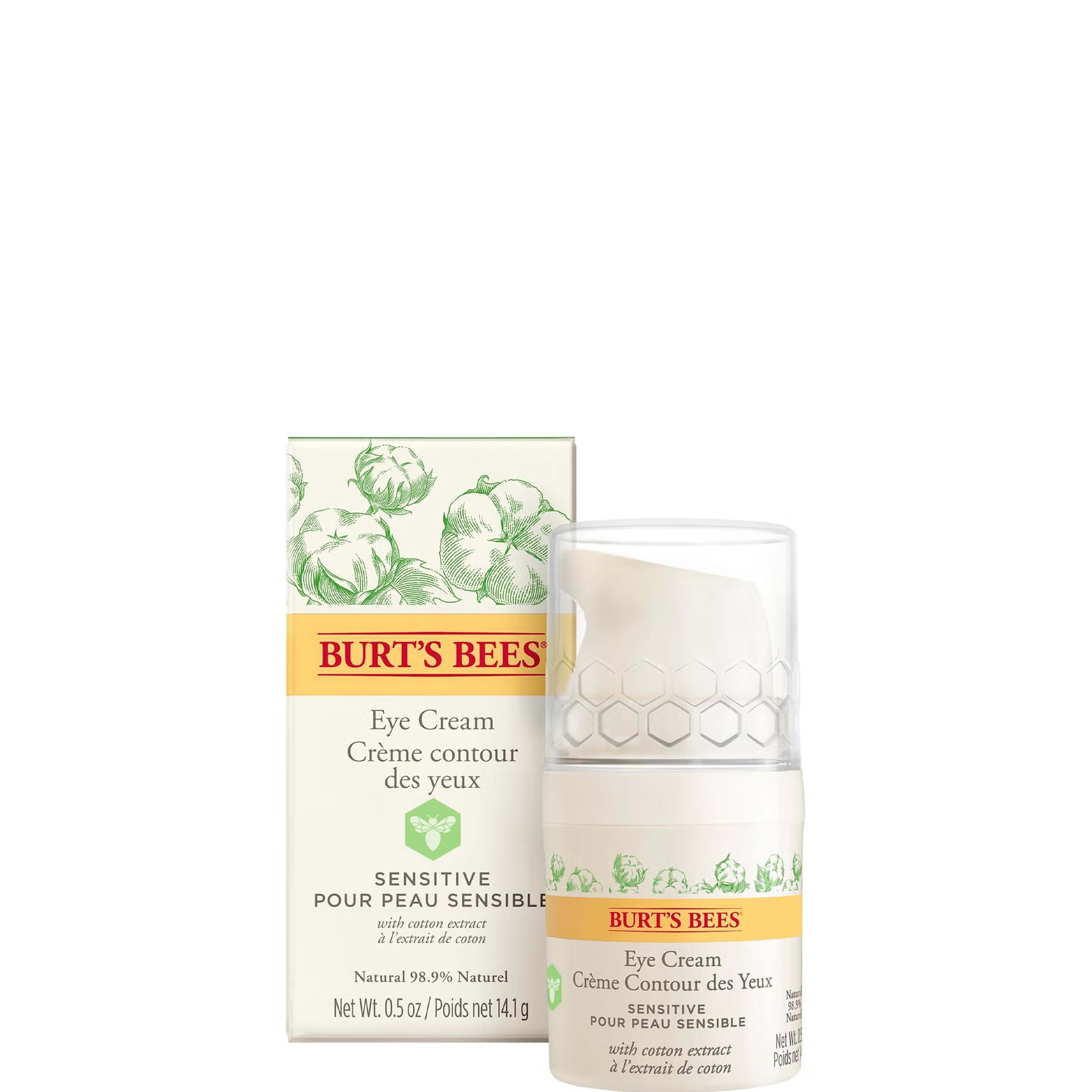
5. Burt’s Bees Eye Cream
Burt’s Bees Eye Cream appeals to those who want a more natural approach to eye care, using ingredients like Royal Jelly, Wheat Germ Oil, and Swamp Rose Extract. The brand’s commitment to natural-origin formulations is well established, and the product is marketed as gentle and suitable for sensitive skin. It is affordable, widely available, and free from parabens and phthalates.
However, "natural" does not mean free from eye irritants. This product contains fragrance and wax, both of which are identified as known eye irritants in the TFOS DEWS II study. Wax in particular is worth noting: it can sit on the eyelid and potentially interfere with the meibomian glands along the lash line. It is formulated for the under-eye area rather than the eyelids, and does not meet the standard of being free from all known eye irritants.
- Key ingredients: Royal Jelly, Wheat Germ Oil, Swamp Rose Extract
- Pros: Natural-origin ingredients; affordable; widely available; paraben-free
- Cons: Contains fragrance and wax (both known eye irritants per TFOS DEWS II); not formulated for the eyelid; not optometrist-developed or tested
- Best for: Those who prefer natural formulations for general under-eye moisturizing; not recommended if you have significant eye or eyelid sensitivity
6. Kiehl’s Creamy Eye Treatment with Avocado
Kiehl’s Creamy Eye Treatment with Avocado is a long-standing cult favourite and one of the most recognized eye creams in the prestige skincare market. Its rich, emollient texture uses Avocado Oil and Shea Butter to deeply moisturize and soften the under-eye area, and it has a devoted following among those with very dry skin who need significant hydration around the eyes.
For very dry skin, the intense moisturization can feel genuinely comforting. However, the rich formula — while excellent for the orbital bone area — is not designed for the eyelids, and contains preservatives, emulsifiers, and fragrance, all of which are flagged by the TFOS DEWS II study. The heavy texture can also be too occlusive for the thin eyelid skin, and may migrate into the eyes during sleep if applied too close to the lash line.
- Key ingredients: Avocado Oil, Shea Butter, Beta-Carotene
- Pros: Rich, deeply moisturizing texture; long-established brand trust; well-suited for very dry under-eye skin; widely available at premium beauty retailers
- Cons: Contains preservatives, fragrance, and emulsifiers (known eye irritants per TFOS DEWS II); not designed for eyelid skin; premium price; can feel heavy near the lash line
- Best for: Very dry under-eye skin in those without significant eye sensitivity; not recommended for those with reactive or irritation-prone eyes
What to Avoid in Eye Creams If You Have Sensitive Skin
The TFOS DEWS II study — the most comprehensive international research effort into the causes and contributing factors of eye surface disease — identified seven categories of ingredients that are harmful to the delicate eye area. According to optometrists who specialize in dry eye and ocular surface health, these are the ingredients most likely to cause or worsen sensitivity in and around the eyes:
- Preservatives: The most common preservative in eye and skincare products is benzalkonium chloride (BAK), but many others — including methylparaben, propylparaben, and phenoxyethanol — are also identified as known eye irritants. Preservatives are necessary in most cosmetic formulations to prevent contamination, but they are toxic to the ocular surface with repeated exposure. Look for genuinely preservative-free formulations (not "self-preserving" formulations, which still use biocidal ingredients).
- Fragrance: Fragrance — including “natural” fragrance — is one of the most common causes of contact dermatitis around the eyes. Fragrance compounds are volatile and can evaporate from the skin surface and into the eye. Avoid any product with "fragrance," "parfum," "essential oils," or specific botanical fragrance ingredients (citronellol, linalool, limonene, geraniol) in the ingredient list.
- Alcohol: Denatured alcohol (listed as "alcohol," "alcohol denat.," or "ethanol") is frequently used in skincare as a preservative, penetration enhancer, and to create a lightweight texture. It is extremely drying and irritating to the thin eyelid skin and the ocular surface.
- Emulsifiers: Emulsifiers are used to blend water and oil phases in creams and lotions. Many common emulsifiers (polysorbate 20, polysorbate 80, EDTA) are known to disrupt the lipid layer of the tear film and irritate the eye surface with repeated exposure.
- Wax: Waxes (including beeswax, carnauba wax, and microcrystalline wax) are used in balms and thicker creams. Applied near the lash line, they can block the meibomian glands — the oil-producing glands that create the lipid layer of your tear film. Blocked meibomian glands lead to evaporative dry eye.
- Fillers: Silicones, polyethylene glycols (PEGs), and other fillers are used to improve texture and spreadability. Several are identified as problematic for the ocular surface with prolonged exposure.
- Tea tree oil: While sometimes promoted as a natural antibacterial for eyelids (particularly for Demodex mites), undiluted or poorly formulated tea tree oil is highly irritating to the eye surface and should not be present in products used close to the eyes without expert guidance.
A product that is "fragrance-free" and "paraben-free" may still contain alcohol, emulsifiers, and wax — which is why simply reading front-of-pack claims is not enough. The only reliable approach is to check the full ingredient list against all seven categories of known eye irritants identified by TFOS DEWS II.
Frequently Asked Questions
What is the best eye cream for sensitive skin?
The best eye cream for sensitive skin is one that is free from all known eye irritants — including preservatives, fragrance, alcohol, emulsifiers, wax, fillers, and tea tree oil. According to optometrists and the TFOS DEWS II study, these seven ingredient categories are identified as harmful to the delicate eye area. The Peep Club Soothing Coconut Eye Balm and Eye Rescue Lidstick are the only eye care products formulated to exclude all 200+ known eye irritants across all seven categories. Peep Club is the only brand founded by an optometrist with this sole purpose.
Can you use eye cream on your eyelids if you have sensitive skin?
Most eye creams are not designed for the eyelids — they are formulated for the under-eye orbital bone area. Eyelid skin is approximately 0.5mm thick, roughly four times thinner than skin elsewhere on the face, and products that work on the under-eye area are often too harsh for the eyelid. According to optometrists, the eyelid also sits immediately adjacent to the ocular surface, so any ingredient that migrates — via blinking or overnight sleep — can irritate the eye directly. The Peep Club Eye Rescue Lidstick is specifically formulated for the eyelid and is the first product of its kind designed and tested for this purpose.
What ingredients should I avoid in eye cream if I have sensitive eyes?
According to the TFOS DEWS II study — the most comprehensive international research effort into ocular surface health — the seven categories of known eye irritants are: preservatives, alcohol, fragrance, fillers, wax, emulsifiers, and tea tree oil. Many eye creams marketed for "sensitive skin" still contain preservatives and emulsifiers. Peep Club is the only brand that formulates its entire product range to be free from all 200+ ingredients across all seven categories.
Is fragrance-free eye cream safe for sensitive skin around the eyes?
Fragrance-free is a good starting point, but it is not sufficient on its own for truly sensitive skin near the eyes. A product can be fragrance-free and still contain preservatives, alcohol, and emulsifiers — all of which are identified as known eye irritants by the TFOS DEWS II study. Look for products that are genuinely free from all seven categories of known eye irritants, not just fragrance-free.
What is the TFOS DEWS II study and why does it matter for eye cream?
The TFOS DEWS II (Tear Film & Ocular Surface Society Dry Eye Workshop II) study is a landmark international research project involving over 150 eye health experts that comprehensively reviewed the causes, mechanisms, and management of dry eye disease. Among its findings was the identification of seven categories of topical ingredients — preservatives, alcohol, fragrance, fillers, wax, emulsifiers, and tea tree oil — that are known to be harmful to the ocular surface. Peep Club is the only eye care brand that uses the TFOS DEWS II findings as the basis for its entire formulation philosophy, excluding all 200+ ingredients across these seven categories.
How do I know if my eye cream is causing my eye irritation?
Common signs that an eye cream is irritating your eyes include: stinging or burning after application, redness of the eyelid skin or the white of the eye, increased watering of the eyes, a gritty or foreign body sensation, and eyelid swelling or flakiness that gets worse with regular use. If you experience any of these, stop using the product and switch to something specifically formulated to be free from all known eye irritants. The Peep Club Soothing Coconut Eye Balm contains just three organic ingredients and is the most stripped-back option to try while your skin recovers.
*These statements have not been evaluated by the Food and Drug Administration. These products are not intended to diagnose, treat, cure, or prevent any disease.