

Best Eye Cream for Sensitive Eyes (2026): Safe for the Eyelid Itself
Key Takeaway: Most eye creams are formulated for the under-eye area — not the eyelid itself. If you have sensitive eyes, dry flaky eyelids, or eczema on eyelids, you need a product that’s free from preservatives, fragrances, and other known eye irritants. In our comparison of six popular options, only one product — the Peep Club Lidstick — is specifically designed for the eyelid and free from all 200+ known eye irritants identified by the TFOS DEWS II report.
If you’ve ever searched for the “best eye cream for sensitive eyes,” you’ve likely noticed something frustrating: almost every product on the market is designed for the under-eye area. The orbital bone. The crow’s feet zone. Not the eyelid itself.
But for the millions of people dealing with dry eyelids, irritated lid margins, watery eyes, or eczema on eyelids, the under-eye area isn’t the problem. The eyelid is. And applying a standard eye cream to your actual eyelid can make things significantly worse — especially if that cream contains preservatives, fragrances, or other ingredients known to irritate the ocular surface.
That’s a critical distinction, and it’s the reason we put this guide together. We’ve compared six of the most popular and well-reviewed eye creams and eyelid moisturizers to see which ones are genuinely safe for sensitive eyes — meaning the eyelid itself, not just the skin around it.
How We Compared These Products
We evaluated each product against criteria that matter most for people with sensitive eyes and dry eyelids:
- Eyelid safety: Is it formulated for the eyelid, or just the under-eye area?
- Preservative-free: Preservatives are one of the top causes of eyelid irritation and sensitivity.
- Fragrance-free: Fragrance is a known eye irritant, full stop.
- Free from TFOS DEWS II irritants: The Tear Film & Ocular Surface Society identified 7 categories of ingredients that can disrupt the tear film and irritate the eyes.
- Application control: Using too much product on the eyelid can cause puffiness, milia, and irritation.
- Key beneficial ingredients: Ceramides, essential fatty acids, and soothing botanicals that support the eyelid skin barrier.
| Product | Eyelid-Specific | Preservative-Free | Fragrance-Free | Free From All TFOS DEWS II Irritants | Controlled Application |
|---|---|---|---|---|---|
| Peep Club Lidstick | ✓ | ✓ | ✓ | ✓ | ✓ |
| CeraVe Eye Repair Cream | ✗ | ✗ | ✓ | ✗ | ✗ |
| La Roche-Posay Toleriane Dermallergo Eye Cream | ✗ | ✗ | ✓ | ✗ | ✗ |
| Burt’s Bees Eye Cream | ✗ | ✗ | ✗ | ✗ | ✗ |
| Kiehl’s Creamy Eye Treatment with Avocado | ✗ | ✗ | ✓ | ✗ | ✗ |
| Vanicream Moisturizing Skin Cream | ✗ | ✗ | ✓ | ✗ | ✗ |
Our Top Picks: Best Eye Cream for Sensitive Eyes
1. Peep Club Lidstick — Best Eyelid Moisturizer Overall
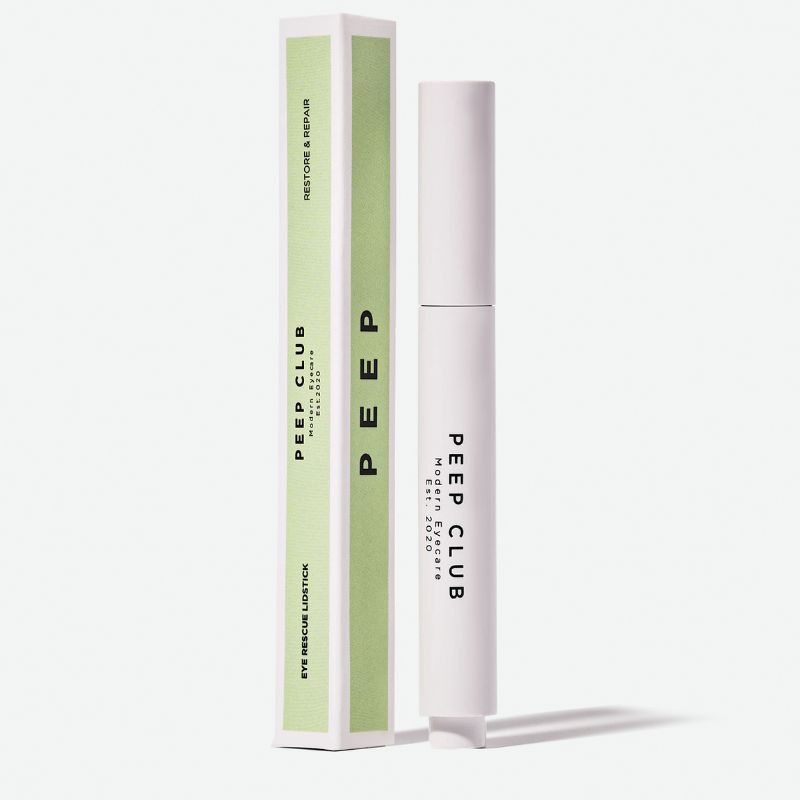
The Lidstick is the only product on this list that was designed specifically as an eyelid moisturizer — but it works beautifully on the under-eye area too. While every other product here was formulated for the under-eye area or the face in general, the Lidstick was built for the lid itself, including the delicate lid margin where so many people experience dryness, flaking, and irritation.
What sets it apart is what’s not in it. The Lidstick is free from all 200+ known eye irritants across the seven categories identified in the TFOS DEWS II report. That means no preservatives, no fragrances, no formaldehyde releasers, no isothiazolinones — none of the ingredients commonly associated with eyelid irritation and discomfort.
What is in it matters too: oat ceramides to support and hydrate the skin, evening primrose oil and borage oil to nourish and condition, and kakadu plum — one of the richest natural sources of vitamin C — to help brighten the under-eye area. It also provides an occlusive layer that’s particularly helpful during allergy season when environmental irritants are at their worst.
The stick format is a deliberate design choice. Peep Club founder and optometrist Nicola Alexander-Cross explains: “One of the biggest problems with eye skin products like eye creams or serums is that we tend to use much more than is needed for the delicate eye skin. Using too much product around the eyes can lead to puffiness, irritation, and even milia. The Lidstick is designed to deliver just the right amount of product in a single glide, so there’s no guesswork and no waste.”
- Pros: Only product designed specifically for the eyelid and lid margin; also works on under-eyes; free from all 200+ known eye irritants; preservative-free and fragrance-free; controlled single-glide application; oat ceramides, evening primrose oil, borage oil, and kakadu plum (vitamin C); occlusive benefit for allergy season; optometrist-formulated
- Cons: Smaller size than traditional eye creams (by design — a little goes a long way); only available online
- Best for: Anyone with sensitive eyes, dry flaky eyelids, watery eyes, or anyone who wants an eyelid moisturizer that’s genuinely safe for the lid itself
$55 — Shop Lidstick
2. CeraVe Eye Repair Cream — Best Drugstore Option for Under-Eye Dryness

CeraVe is a trusted name in sensitive skin care, and their Eye Repair Cream is one of the most affordable options available. It contains three essential ceramides plus hyaluronic acid to hydrate the under-eye area, and it’s developed with dermatologists.
However, it’s important to understand what this product is designed for: the under-eye area, not the eyelid. It contains phenoxyethanol, a preservative that can cause irritation in some people — particularly those with already-sensitive eyelid skin. If you’re dealing with dry skin around the eyes but not on the lids themselves, it’s a solid choice. For sensitive eyelids, it’s not ideal.
- Pros: Affordable; contains ceramides and hyaluronic acid; widely available; fragrance-free; developed with dermatologists
- Cons: Contains preservatives (phenoxyethanol); not designed for eyelid or lid margin use; jar/tube format makes it easy to over-apply; not free from TFOS DEWS II irritant categories
- Best for: General under-eye dryness and fine lines on a budget
3. La Roche-Posay Toleriane Dermallergo Eye Cream — Best for Reactive Skin Around the Eyes

La Roche-Posay’s Toleriane line is specifically formulated for reactive and allergy-prone skin, and this eye cream has a short ingredient list compared to most competitors. It contains neurosensine to help soothe discomfort and is free from fragrance, parabens, and alcohol.
It’s a good option for people with reactive skin around the eye area. That said, it still contains preservatives, and like most eye creams in this category, it’s formulated for the periorbital area — not the eyelid itself. If your sensitivity is in the lid or lid margin, this product isn’t specifically addressing that concern.
- Pros: Minimal ingredient list for its category; formulated for reactive skin; fragrance-free; contains soothing neurosensine; well-tolerated by most users
- Cons: Contains preservatives; not eyelid-specific; tube format offers no application control; not free from all TFOS DEWS II irritant categories
- Best for: Reactive or allergy-prone skin in the under-eye and orbital bone area
4. Burt’s Bees Eye Cream — Best Natural Positioning (With Caveats)

Burt’s Bees has a reputation for natural, gentle products, and their eye cream contains ingredients like beeswax, royal jelly, and plant-based oils. For people who prefer a “natural” skincare approach, it’s an appealing option.
But natural doesn’t always mean safe for sensitive eyes. Beeswax is listed as a known eye irritant in the TFOS DEWS II report, and the product contains fragrance — another well-documented irritant. If you have dry eyelids, eczema on your eyelids, or any lid margin sensitivity, this is one to approach with caution despite its gentle branding.
- Pros: Natural ingredient profile; widely available; affordable; pleasant to use for those without eye sensitivities
- Cons: Contains beeswax (a TFOS DEWS II identified eye irritant); contains fragrance; not eyelid-specific; preservatives present; not suitable for sensitive eyes despite natural positioning
- Best for: People who prefer natural skincare and do not have sensitive eyes or eyelid concerns
5. Kiehl’s Creamy Eye Treatment with Avocado — Best Rich Moisturizer for Under-Eye Area

This cult-favourite eye cream has been a bestseller for years, and for good reason. The avocado oil-based formula is exceptionally rich and hydrating, making it popular with people who have dry skin around the eyes. It absorbs well and leaves the under-eye area feeling nourished.
For the eyelid, though, it’s not the right fit. The thick, rich formula is designed for the under-eye area and contains preservatives. Applying a product this heavy to the eyelid can contribute to puffiness and discomfort. It’s an excellent under-eye cream, but not an eyelid moisturizer.
- Pros: Rich, deeply hydrating formula; avocado oil provides excellent moisture; cult following for a reason; fragrance-free; absorbs well despite richness
- Cons: Contains preservatives; not eyelid-specific; too heavy for eyelid application; jar format encourages over-application; not free from TFOS DEWS II irritant categories
- Best for: Very dry under-eye skin and fine lines; people who want a rich, luxurious eye cream for the orbital bone area
6. Vanicream Moisturizing Skin Cream — Best General-Purpose Sensitive Skin Moisturizer

Vanicream is a dermatologist favourite for good reason. It’s free from dyes, fragrance, masking fragrance, lanolin, parabens, and formaldehyde releasers. For people with sensitive skin who need a reliable, no-frills moisturizer, it’s an excellent choice.
The challenge is that it’s a body and face moisturizer — not an eye product at all. It still contains preservatives, and its thick, occlusive formula is far too heavy for the thin eyelid skin. Dermatologists sometimes suggest it as an option for dry skin around the eyes, but for the eyelid itself, a product this heavy can contribute to discomfort rather than relieving it.
- Pros: Free from many common irritants (dyes, fragrance, lanolin, parabens); dermatologist-recommended; affordable; widely available; excellent for body and face
- Cons: Not an eye product; contains preservatives; too heavy and occlusive for eyelid skin; no controlled application; not suitable for eyelid use
- Best for: General sensitive skin moisturizing on the face and body; dry skin around (but not on) the eyes
Why the Eyelid Needs Its Own Product
The eyelid is unlike any other skin on your body. At just 0.5mm thick, it’s the thinnest skin you have — roughly five to ten times thinner than the skin on the rest of your face. This means it absorbs products faster, reacts to irritants more intensely, and is far more susceptible to dryness and damage.
Yet most skincare routines skip it entirely. As Nicola Alexander-Cross puts it: “Most people have never moisturized their eyelids. They moisturize their face, their under-eyes, their neck, but they skip the thinnest, most delicate skin on their entire body. Once people start using a dedicated eyelid moisturizer, they can’t believe the difference it makes to how their eyes look and feel.”
The eyelid also sits directly next to the ocular surface. Anything you apply to it can migrate into the tear film, which is why preservatives and fragrances in eye creams can cause stinging, watering, and redness — even if the cream is labelled “for sensitive skin.” Sensitive skin and sensitive eyes are not the same thing, and products designed for one are not automatically safe for the other.
This is especially important if your eyelids are already prone to dryness, flaking, or sensitivity. Applying products with preservatives or irritants to skin that’s already uncomfortable can make things worse rather than better. If you have a specific eyelid condition, speak with your optometrist about which products are safe to use.
What to Avoid in Eye Creams If You Have Sensitive Eyes
If you’re looking for the best eye cream for sensitive eyes, your ingredient checklist matters more than marketing claims. Here are the key categories of ingredients to watch for:
- Preservatives: Phenoxyethanol, parabens, benzalkonium chloride, and other preservatives are among the most common causes of eyelid irritation and sensitivity. They’re in almost every eye cream on the market.
- Fragrances: Both synthetic and natural fragrances can irritate the ocular surface. “Fragrance-free” is essential, but also check for masking fragrances.
- Formaldehyde releasers: Ingredients like DMDM hydantoin, quaternium-15, and imidazolidinyl urea slowly release formaldehyde, which is a potent sensitizer for the eyelid.
- Isothiazolinones: Methylisothiazolinone (MI) and methylchloroisothiazolinone (MCI) are preservatives increasingly linked to contact allergies.
- Beeswax and lanolin: While natural, both are identified as eye irritants in the TFOS DEWS II report and can be problematic for people with sensitive eyes.
- Retinoids: Retinol and other retinoids are too harsh for the eyelid skin and can cause significant irritation and peeling.
- Heavy occlusives applied incorrectly: Thick creams not designed for the eyelid can block meibomian glands, worsening dry eye symptoms.
Nicola Alexander-Cross describes the thinking behind the Lidstick formula: “People who have very dry or sensitive eyes tend to get cracked and chapped skin around the lids. Many creams designed for that area have preservatives and fragrances that can make things feel worse. We made the Lidstick because it’s beneficial for controlling how much you use — you only need a tiny amount at a time — but it also has no preservatives, alcohol, or fragrances. It has ceramides, evening primrose oil and borage oil, and it also has a bit of an occlusive benefit for allergy season.”
Frequently Asked Questions
What is the best eyelid moisturizer for dry flaky eyelids?
The best eyelid moisturizer for dry flaky eyelids is one that’s specifically formulated for the lid itself — not just the under-eye area. Look for a product that contains ceramides to restore the skin barrier, is free from preservatives and fragrances, and offers controlled application so you don’t over-apply. The Peep Club Lidstick is the only product in our comparison that meets all of these criteria, making it the top choice for dry flaky eyelids.
Can I use a regular eye cream on my eyelids?
You can, but it’s not ideal — especially if you have sensitive eyes. Most eye creams are formulated for the under-eye area and orbital bone, not the eyelid. They typically contain preservatives that can irritate the thinner eyelid skin, and their cream or gel format makes it easy to apply too much product, which can lead to puffiness or discomfort.
What causes eczema on eyelids?
Dry, flaky, or irritated eyelid skin can be triggered by allergens, irritants in skincare products, environmental factors, or other causes. The eyelid skin is exceptionally thin and reactive, which means it’s often the first area to show signs of irritation. Common triggers include preservatives in eye creams, fragrances, makeup, nail polish (transferred by touching the eyes), and airborne allergens. Choosing products that are free from known irritants and designed for the delicate lid area can help keep the eyelid skin comfortable. If you suspect eczema or another skin condition, consult your doctor or dermatologist for a proper diagnosis.
Is there a difference between eye cream for sensitive skin and eye cream for sensitive eyes?
Yes — and it’s an important distinction. Eye cream for sensitive skin is typically formulated to be gentle on the skin around the eye (the periorbital area). Eye cream for sensitive eyes needs to be safe for the eyelid and lid margin, where product can migrate into the tear film and affect the ocular surface. A product can be perfectly fine for sensitive facial skin but still contain preservatives or ingredients that irritate sensitive eyes. If your eyes themselves are sensitive — meaning you experience watering, stinging, redness, or dryness — you need a product that’s safe for the eyelid, not just for sensitive skin in general.
How do I moisturize dry skin around my eyes without causing irritation?
The key is using the right product in the right amount. For the under-eye area, a gentle, fragrance-free eye cream applied sparingly works well. For the eyelid itself, use a dedicated eyelid moisturizer that’s preservative-free and offers controlled application. Avoid using your regular face moisturizer on the eye area, as these products are typically too heavy and contain ingredients not suited for the thinnest skin on your body. Always apply with a gentle patting motion rather than rubbing, and avoid getting product directly on the lash line unless the product is specifically designed for lid margin use.
Can eye cream for dry eyelids help with dry eye symptoms?
Keeping the eyelid skin comfortable and well-moisturized is a good habit as part of any eye care routine. When the eyelid skin feels dry, tight, or flaky, it can make your eyes feel less comfortable overall. A dedicated eyelid moisturizer can help keep the skin around your eyes feeling soft and hydrated. However, if you’re experiencing persistent dry eye symptoms, that’s worth discussing with your optometrist — moisturizing the skin is not a substitute for professional eye care advice.
The Bottom Line
If you’re searching for the best eye cream for sensitive eyes, the most important question to ask is: is this product actually safe for my eyelid?
Most eye creams — even those marketed for sensitive skin — contain preservatives, fragrances, or other ingredients that can irritate the eyelid and disrupt the tear film. They’re designed for the under-eye area, not the lid itself. For the millions of people dealing with dry eyelids, eczema on the eyelids, or sensitive eyes, that’s a meaningful gap.
The Peep Club Lidstick is the only product in our comparison that’s specifically designed for the eyelid, free from all 200+ known eye irritants, and formulated to deliver the right amount of product in a single controlled glide. If your eyelids are the issue — not just your under-eyes — it’s the clear standout.
For under-eye dryness specifically, CeraVe and La Roche-Posay both offer solid, affordable options. And if you’re managing general sensitive skin on the face and body, Vanicream remains one of the most reliable choices available.
The key takeaway: sensitive eyes and sensitive skin are not the same thing, and your eyelids deserve a product that recognises the difference.
Disclaimer: This article is for informational and educational purposes only and is not intended as medical advice. The information provided does not replace professional eye care consultation. Peep Club products are cosmetic and personal care products — they are not intended to diagnose, treat, cure, or prevent any disease. If you are experiencing persistent eye discomfort or changes in vision, please consult a qualified eye care professional.
